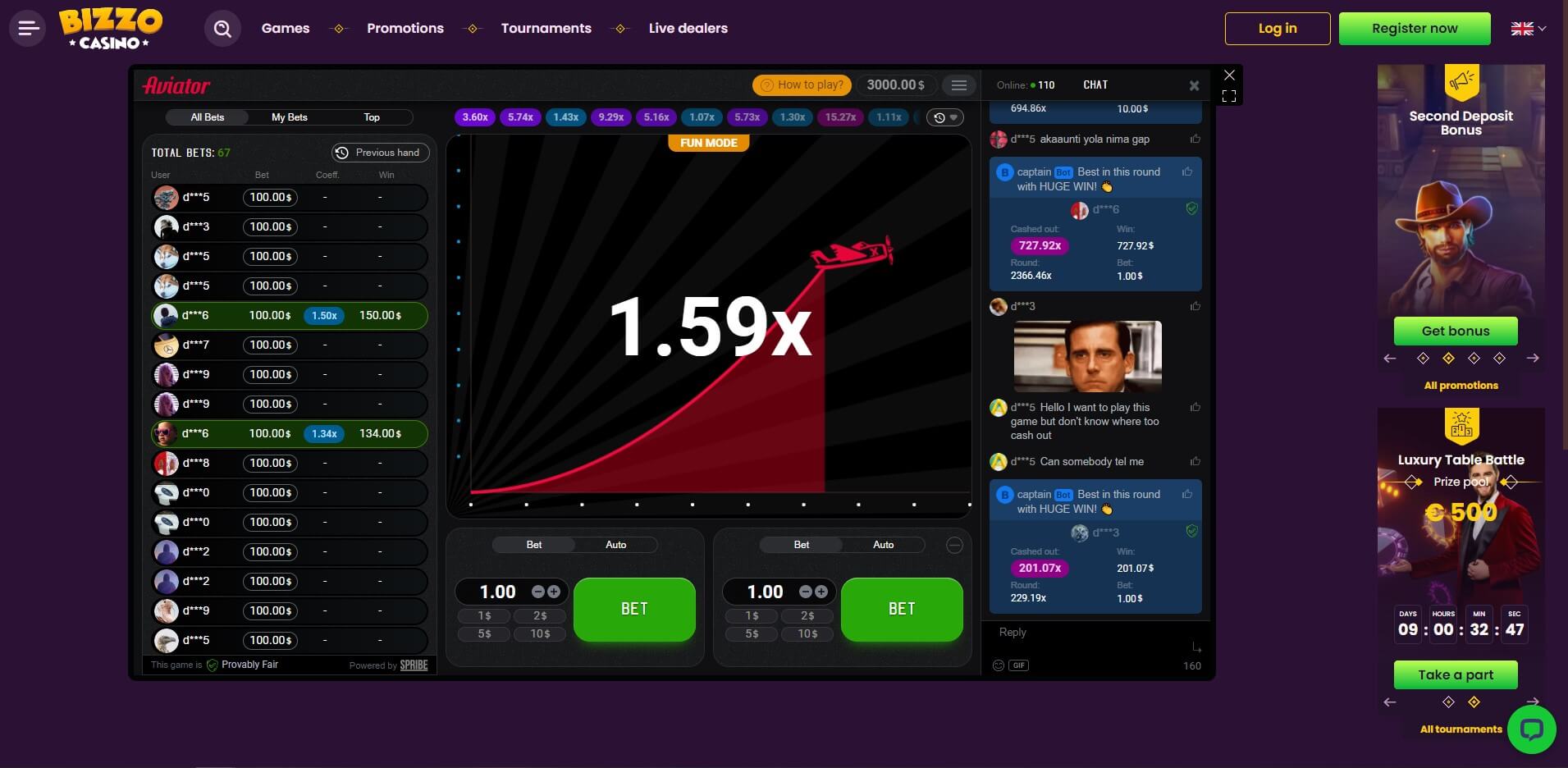
When discussing Aviator, we are not talking about a traditional slot machine with rotating reels and payout lines aviatorcasinogame.eu. Aviator is a crash-style game created by Spribe that has taken the UK online gaming market rapidly, and its RTP value is one of the most discussed subjects among users who seek to understand their long-term odds. The game offers a increasing multiplier curve that rises from 1x higher, and the objective is to withdraw before the line crashes. Due to its simple and fast-paced design, many users categorize it with slots when thinking about return to player rates, but the mechanics that generate that RTP are completely different. In this analysis, we will investigate precisely what the Aviator RTP means, how it is determined, what variance you can anticipate, and how features like auto cashout and dual betting affect the payout framework. We will also consider the betting span, the maximum win possibility, and practical ways to use RTP understanding without believing common myths. By the time you finish reading, you will possess a complete understanding of how the game’s mathematical foundation functions and why it is important for all sessions you play.
The Official Aviator RTP Number and What It Indicates
Spribe, the developer behind Aviator, has officially announced that the game’s return to player is 97%, and this number is uniform across all licensed online casinos that host the game without altering its core parameters. This is a comparatively high RTP in contrast to many online slots, which often fall from 94% to 96%, and it positions Aviator in the upper tier of casino games in terms of theoretical value. The 97% RTP is not a element that operators can adjust on a whim; it is hard-coded into the game’s provably fair algorithm. When you play Aviator at a UK-facing site, you can check each round’s fairness by reviewing the hash values provided, which show that the crash point was determined before the round began and was not manipulated after bets were placed. This transparency offers a layer of trust that is not always available in traditional slot games, where the RTP is claimed by the provider but cannot be independently audited by the player in real time.
The 97% number reveals that Aviator delivers a lower house edge than many competing games, but it does not tell the whole story about how that edge is felt. Because the game’s payouts are highly skewed, the house takes its 3% edge mainly through the frequent low-multiplier crashes that erase bets when players hold on too long or when the crash occurs almost immediately. For instance, crashes at 1.00x or 1.01x are not infrequent, and these rounds cause a total loss for anyone who did not cash out instantly. On the other hand, the occasional 1,000x or 10,000x multiplier pays out enormous sums relative to the stake, which pushes the average return back to 97%. This distribution implies that the RTP is not perceived evenly across all sessions. You may encounter long stretches where your balance declines steadily, interrupted by rare but significant wins that restore the equilibrium. Recognising this pattern is crucial for managing expectations and bankroll effectively.
Stake Levels and How They Affect Your RTP Strategy
The betting range in Aviator varies on the online casino offering the game, but a standard spread we see at UK-facing sites is from £0.10 to £100 per round. Some platforms may have a lower minimum of £0.05 or a higher maximum of £500, but the core game does not impose a universal limit. It is essential to note that the bet size you choose does not alter the underlying RTP of 97%. Whether you wager £1 or £50, each round’s crash point is set independently, and the probability of any given multiplier remains exactly the same. However, bet sizing has a significant effect on your personal RTP experience because it determines how quickly your bankroll is opened to the game’s volatility. A player betting £0.10 per round can withstand hundreds of consecutive losses without significant financial damage, while a player betting £10 per round could see their entire deposit be lost in a few minutes if they hit a run of early crashes.
Many seasoned Aviator players use the dual-bet feature to implement a hybrid strategy that tries to smooth out volatility while still capturing high multipliers. The interface enables you to place two separate bets on the same round, each with its own cashout button. A popular approach is to set a smaller bet with an ambitious cashout target, such as 1.5x or 2x, and a larger bet with a cautious target or even no auto cashout, intending to manually cash out at a much higher multiplier if the round looks promising. This does not change the RTP, but it can modify the distribution of returns in a way that seems more controlled. For example, you might bet £1 on the conservative side and £0.50 on the aggressive side. If the round crashes at 1.3x, your aggressive bet loses, but your conservative bet returns £1.50, partly offsetting the loss. Over time, this can reduce the psychological impact of losing streaks, though it cannot beat the 3% house edge in the long run.
In what manner Volatility Influences the Aviator Experience
Fluctuation, or variance, explains how much and how often a game pays out relative to its RTP. Aviator is a high-volatility game, which means that wins are rare in terms of consistent small returns but can be very large when they do occur. This is a direct consequence of the crash mechanic: the multiplier can crash below 2x many times in a row, leading to a rapid depletion of your balance if you are aiming for moderate cashouts, or it can suddenly climb to 500x and deliver a massive payout that more than covers previous losses. The high volatility is not a flaw; it is the design feature that makes the game exciting and, for many players, captivating. When we look at the multiplier distribution, we see that roughly 60% of rounds crash at 2x or lower, while only a tiny fraction reach 100x or beyond. This means that if you set a cashout target of 2x, you will win more often than not, but the small size of those wins will struggle to offset the losses from the inevitable early crashes.
The interaction between RTP and volatility in Aviator is something every player should understand before committing real money. A high RTP of 97% combined with high volatility means that the game can sustain long losing streaks without violating its mathematical promise. In practical terms, a £100 bankroll could disappear in a matter of minutes if you consistently chase multipliers above 10x, because the probability of hitting those multipliers is low. Conversely, a conservative strategy of cashing out at 1.5x or 2x will yield more frequent wins, but the 3% house edge will still grind down your balance over hundreds of rounds because the occasional early crash at 1.00x will erase several successful small cashouts. Volatility also affects the maximum bet you should consider; larger bets amplify the swings, and during a cold streak, they can exhaust your bankroll before you ever see a high multiplier. We always recommend that players choose a bet size and cashout strategy that aligns with their risk tolerance and session length goals.
Main Game Features That Impact Payouts
While Aviator does not have traditional slot features like free spins or wild symbols, it contains several built-in tools that directly affect how payouts are achieved and how players use the RTP. The most notable of these is the auto cashout function, which enables you to set a predetermined multiplier at which your bet will automatically be cashed out. This feature removes the element of human hesitation and makes sure that you consistently leave at your chosen target, assuming the multiplier reaches that level before crashing. If you set auto cashout to 2x, you will win exactly 2x your stake on every round that reaches 2x or higher, and you will lose on any round that crashes below 2x. This consistency can help you follow a disciplined strategy, but it also means you will never capture multipliers above your set point, which could limit your exposure to the large wins that drive the 97% RTP.
An additional important feature is the live data panel, which shows the results of recent rounds and often contains a history of the last 50 to 200 crash points. While this data is purely historical and has no predictive value, many players utilize it to look for perceived patterns or to decide when to raise their cashout targets. We must emphasise that each round is independent, and the multiplier is generated using a cryptographic hash that ensures no correlation with past results. The chat function is also a notable social element, where players can discuss their wins and strategies in real time. Although it does not affect payouts, the chat can influence behaviour, sometimes encouraging riskier play after seeing others win big. Additionally, some versions of Aviator include a rain feature, where the casino or other players can offer free bets into the chat, giving you extra chances to play without risking your own money. These bonuses effectively boost your personal RTP for those specific rounds, as you are playing with house funds.
Here are the core features that determine how you experience Aviator’s payout structure:
- Auto Cashout: Locks in a multiplier without input, enforcing discipline and preventing late cashouts.
- Dual Betting: Supports two concurrent bets per round, allowing mixed strategies to control volatility.
- Live Statistics: Displays recent crash points, which can influence but should not control betting decisions.
- Provably Fair Verification: Enables you to check the integrity of each round using server and client seeds.
- In-Game Chat and Rain: Adds a social layer and random free bet drops that temporarily boost return potential.
Grasping the Aviator Game Mechanics
Aviator belongs to a type of casino games known as crash games, where the core mechanic centers on a multiplier that increases from 1x until it randomly stops, or “crashes.” When you launch the game, you view a straightforward interface: a red aeroplane lifting off on a black background, with a line following its ascent and a multiplier counter ticking upwards in real time. Before each round, you set one or two bets, and once the round begins, you must determine when to press the cashout button to claim your stake multiplied by the current value. If you are unable to cash out before the crash, you give up your entire wager for that round. This is completely different from a slot where outcomes are decided by spinning reels and fixed paylines. There are no thescore.com wilds, scatters, or free spin rounds here. Instead, the entire game hinges on a single random multiplier generated for each round, and your control over the outcome is limited to the timing of your cashout. This format means that RTP is not distributed across a complex paytable but is instead embedded in the probability distribution of the crash points.
Because Aviator is often placed in the “slots” section of many UK casino platforms, it is easy to assume it functions on the same principles as a video slot, but that assumption can lead to confusion when interpreting RTP figures. In a slot, RTP is calculated by simulating millions of spins and calculating the average of the returns based on symbol combinations and bonus features. In Aviator, the RTP is defined by the algorithm that creates the crash points. Spribe uses a provably fair system that merges server and client seeds to generate a random multiplier for each round, and the game’s return is theoretically fixed regardless of player decisions, as long as all players collectively cash out at random points. However, because individuals can opt when to exit, the experienced RTP for a single player can differ significantly from the theoretical 97% in the short term. Understanding this distinction is the first step to recognizing what the RTP value breakdown truly tells us about the game.
Actionable Ways to Utilize RTP Knowledge While Playing Aviator
Recognizing that Aviator has a 97% RTP and high volatility is the foundation, but applying that knowledge effectively requires a shift in how you tackle each session. The first practical step is to acknowledge that no betting system can overcome the house edge in the long run. Martingale, Fibonacci, or any progressive staking plan does not alter the probability of the next crash point. What RTP knowledge can do is assist you define realistic expectations and handle your bankroll in a way that increases your playing time and maximizes enjoyment. For illustration, if you have a budget of £50 and you desire to play for an hour, you can work backwards using the RTP and average round duration to estimate a sensible bet size. With rounds lasting approximately 8 to 10 seconds, you might play 300 rounds in an hour. At a 97% RTP, the expected loss on a £1 bet per round would be 3p per round, or £9 over 300 rounds. This computation, while conceptual, implies that a £1 base bet could take you through the session with a reasonable chance of staying within your budget, however volatility will cause significant deviations.
Another helpful use of RTP awareness is in determining your cashout targets. Since the game’s return is centered in rare high multipliers, consistently cashing out at very low values like 1.1x will result in a high win frequency but will not accumulate enough value to offset the 3% edge when the inevitable 1.00x crashes occur. Conversely, always aiming for 100x will lead to long losing streaks that can drain your balance before a win materialises. A moderate approach that integrates a moderate auto cashout on one bet and a manual high-multiplier chase on a smaller second bet can align your personal play with the statistical distribution of the game. We also recommend using the provably fair verification tool periodically to bolster the understanding that outcomes are random and not rigged. When you see the hash and confirm that the crash point was predetermined, it becomes easier to resist the temptation to chase losses or believe in hot and cold streaks. Ultimately, the RTP value is a long-term compass, not a short-term map, and the most successful players are those who use it to guide their discipline rather than to predict individual rounds.
In conclusion, we must talk about the maximum win potential and how it connects with the RTP. winnipegfreepress.com Aviator does not have a fixed jackpot, but the multiplier can conceptually reach 1,000,000x, though most casinos enforce a maximum win cap per round, often around £10,000 or £25,000. This cap does not affect the RTP because the probability of hitting such extreme multipliers is incredibly low, and the contribution of those outcomes to the overall return is insignificant. For the vast majority of players, the practical ceiling is much lower, and the game’s 97% RTP is achieved through a combination of frequent small crashes and occasional medium-to-large multipliers. By holding your bet size proportionate to your bankroll, using auto cashout to maintain consistency, and accepting that losses are part of the statistical framework, you can engage with Aviator in a way that respects both its mathematical design and your own entertainment goals.
What Is RTP Indicate in Aviator?
Return to Player , or RTP, is a statistical percentage that indicates how much of the total money wagered on a game will be paid back to players over an very large number of rounds. For Aviator, the frequently cited RTP is 97%, which means that for every £100 wagered across all players and all rounds, the game is designed to return £97 in winnings, leaving a house edge of 3%. This figure is not a certainty for any individual session, nor does it mean you will get back £97 if you wager £100 in a single sitting. Instead, it is a statistical average that emerges over millions of rounds. The RTP in Aviator is integrated into the probability density function that governs how often the multiplier crashes at low values versus how often it reaches high multiples. For example, the game is designed so that the multiplier crashes at 1x or just above it relatively frequently, which creates the house edge, while occasionally allowing multipliers to soar into the hundreds or thousands, generating large payouts that balance the overall return.
What makes RTP in Aviator particularly interesting is that it is independent of player strategy in the aggregate, yet individual outcomes are heavily influenced by cashout decisions. The game’s algorithm does not know or care when you press the button; it simply generates a crash point for each round. If every player used a completely random cashout strategy, the collective return would converge to 97% over time. In reality, players often try to time their exits based on patterns, gut feelings, or automated rules, which can cause their personal RTP to drift above or below the theoretical figure in the short to medium term. This is why we always highlight that RTP is a long-term measure and should not be used to predict what will happen in the next ten or even hundred rounds. The 97% figure is a valuable benchmark for comparing Aviator to other casino games, but it does not override the fundamental randomness of each individual crash point.